




WeChat ID :


Login/Register

 Posted on 17 Oct 2026
 44351


Many times I have talked about the differences
between a 30-year lease
and registering a rights-linked property right.
But people are still confused
and often ask me privately.
.
Today I will go into the details
and the different limitations again,
briefly as follows.
.
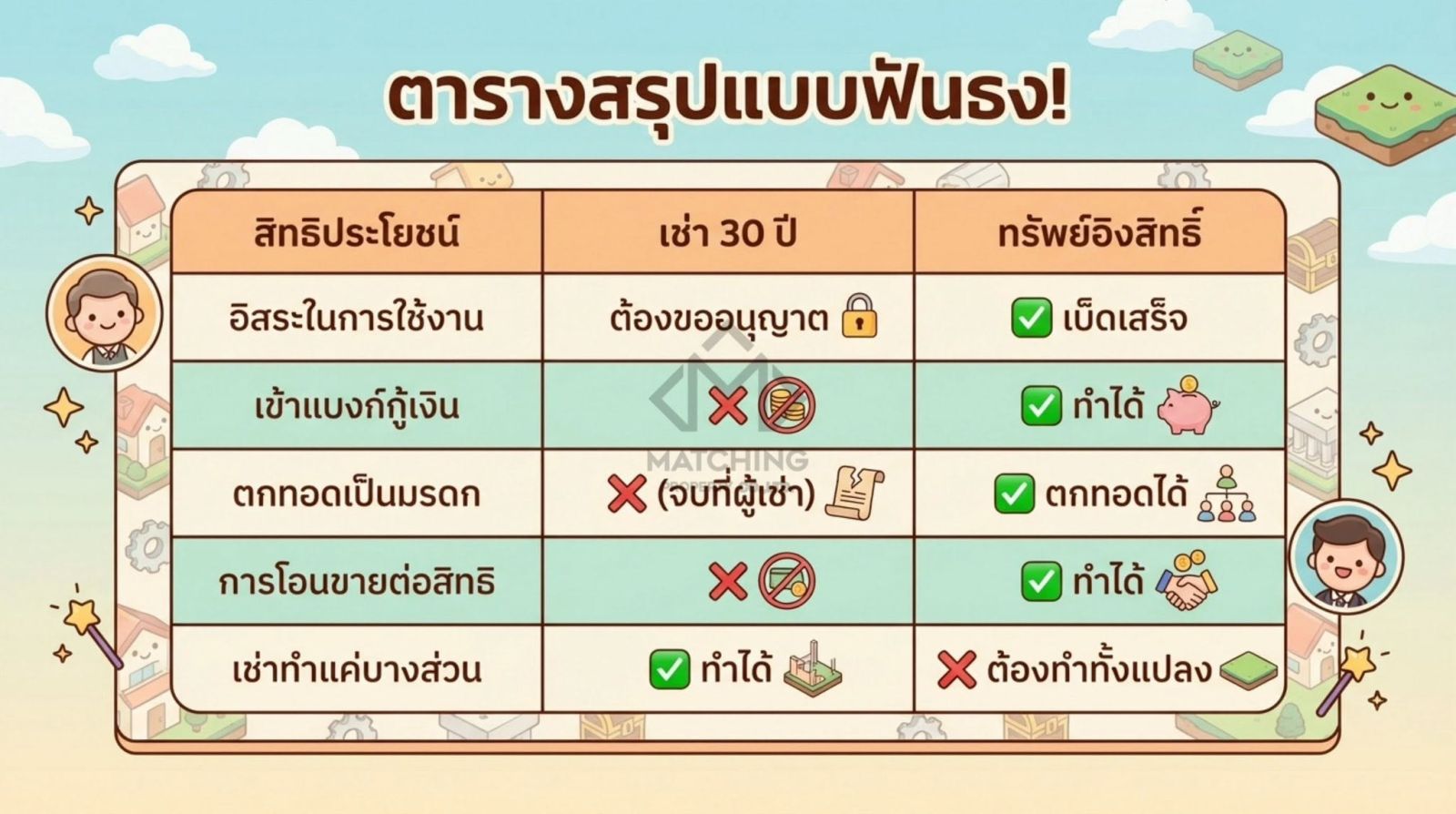
1. Nature of the right and flexibility
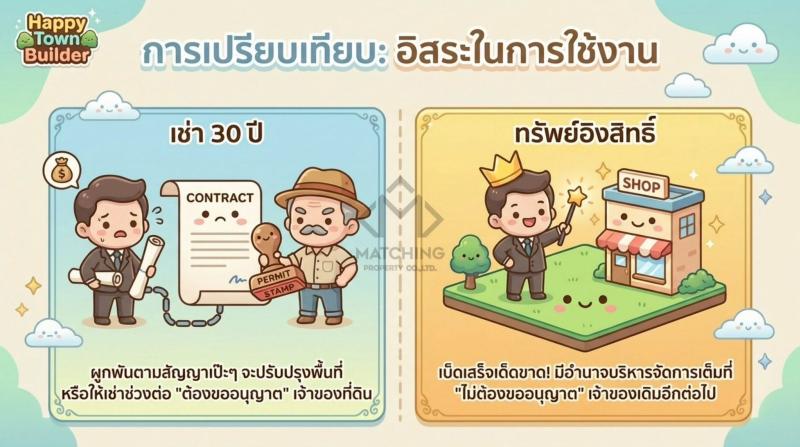
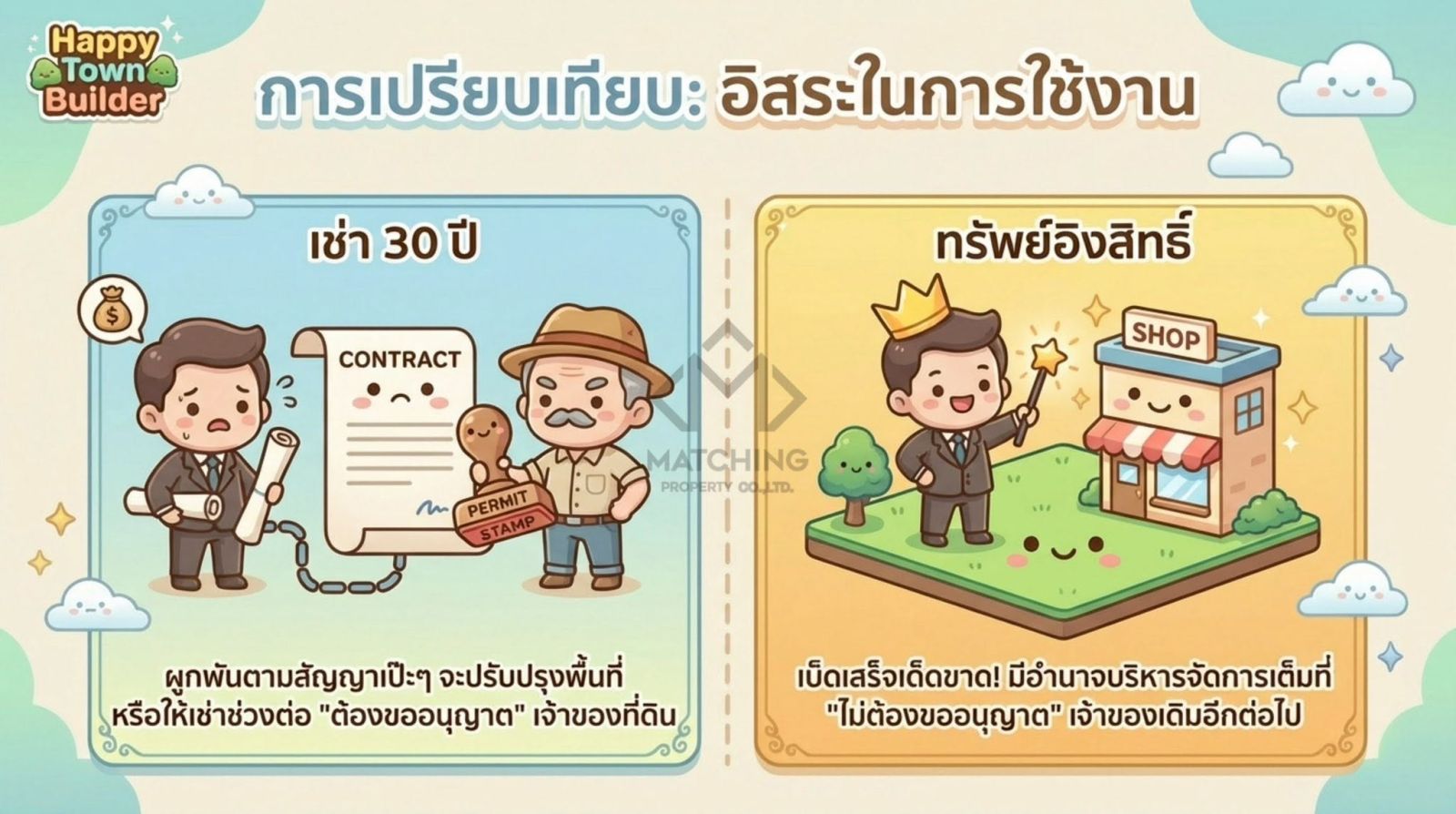
A 30-year lease
is strictly tied to the contract.
If the tenant wants to operate any business
outside what is stated in the contract,
or wants another person to sublease it,
they must always ask the landowner for permission first.
.
A rights-linked property right
is the registration and transfer of the right to use,
dispose of and receive benefits
from the ownership of the landowner.
The rights purchaser has complete authority
to manage the land.
They can operate any business
without having to ask the original landowner for permission again.
.
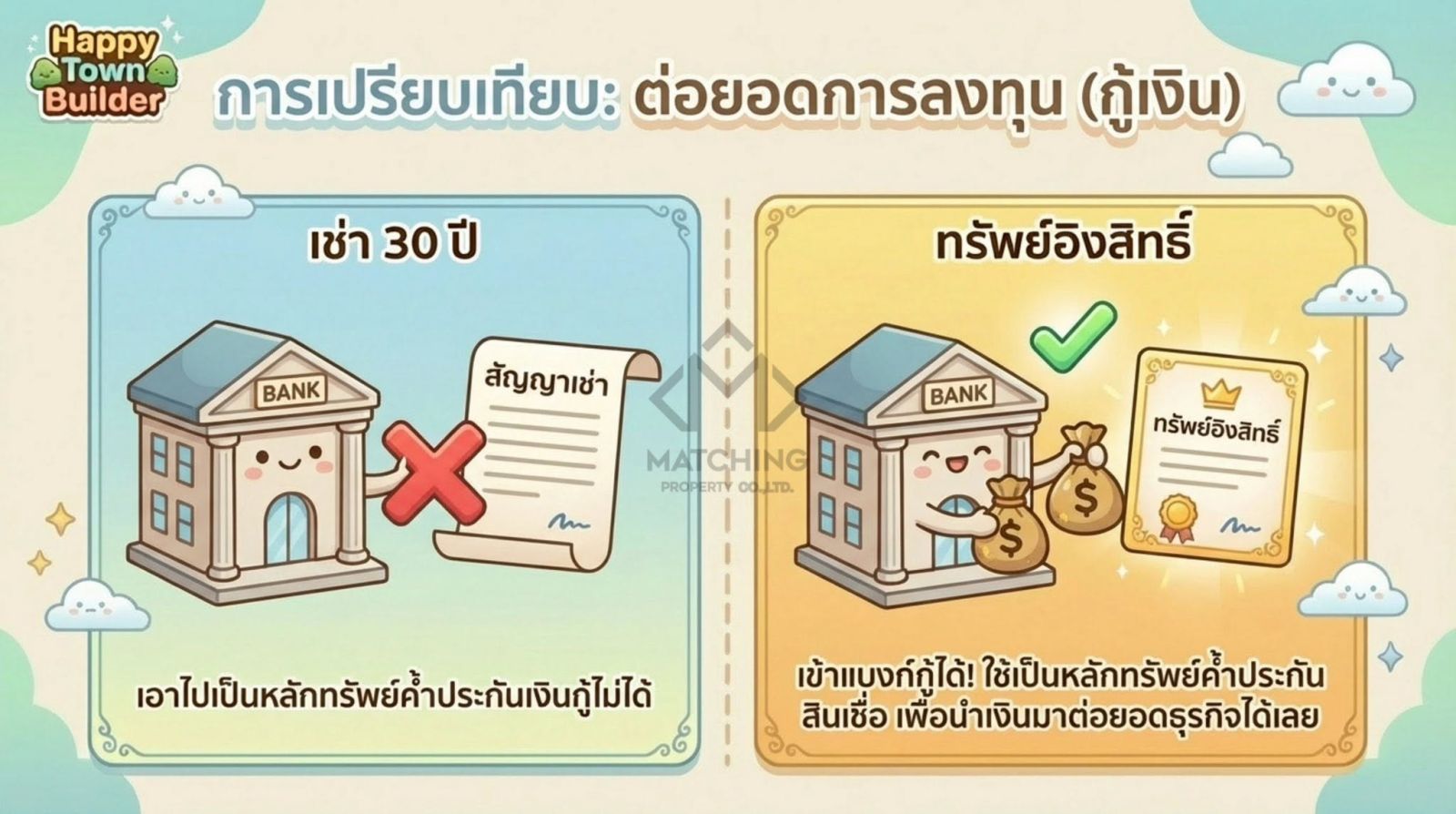
In addition,
this document can be used as collateral
to request a loan from a bank,
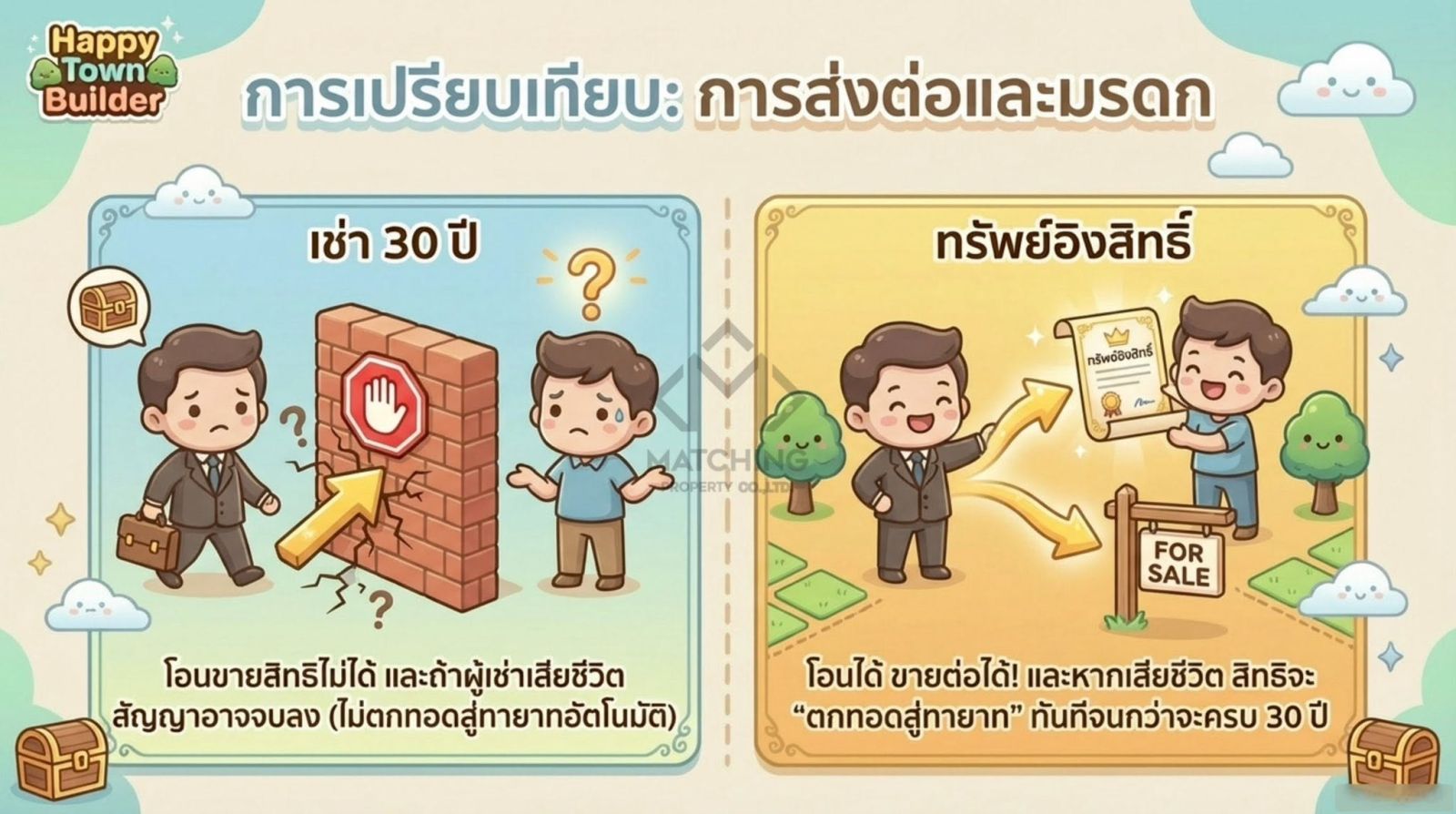
and it can be transferred, sold
or conveniently passed to another person
throughout the period of no more than 30 years.
.
.
.
2. Inheritance
A 30-year lease:
if the tenant dies,
the landowner may not wish to continue the lease,
causing the lease right to end.
.
A rights-linked property right:
if the rights holder dies,
the right can pass as an inheritance to the heirs.
.
.
.
3. Foreign ownership
A rights-linked property right:
foreigners can use this right
and have their name specified as the rights owner
in the rights-linked property certificate.
This opens an opportunity
for foreigners to have their names in a Thai rights document
without being an outright purchase of the land.
.
.
.
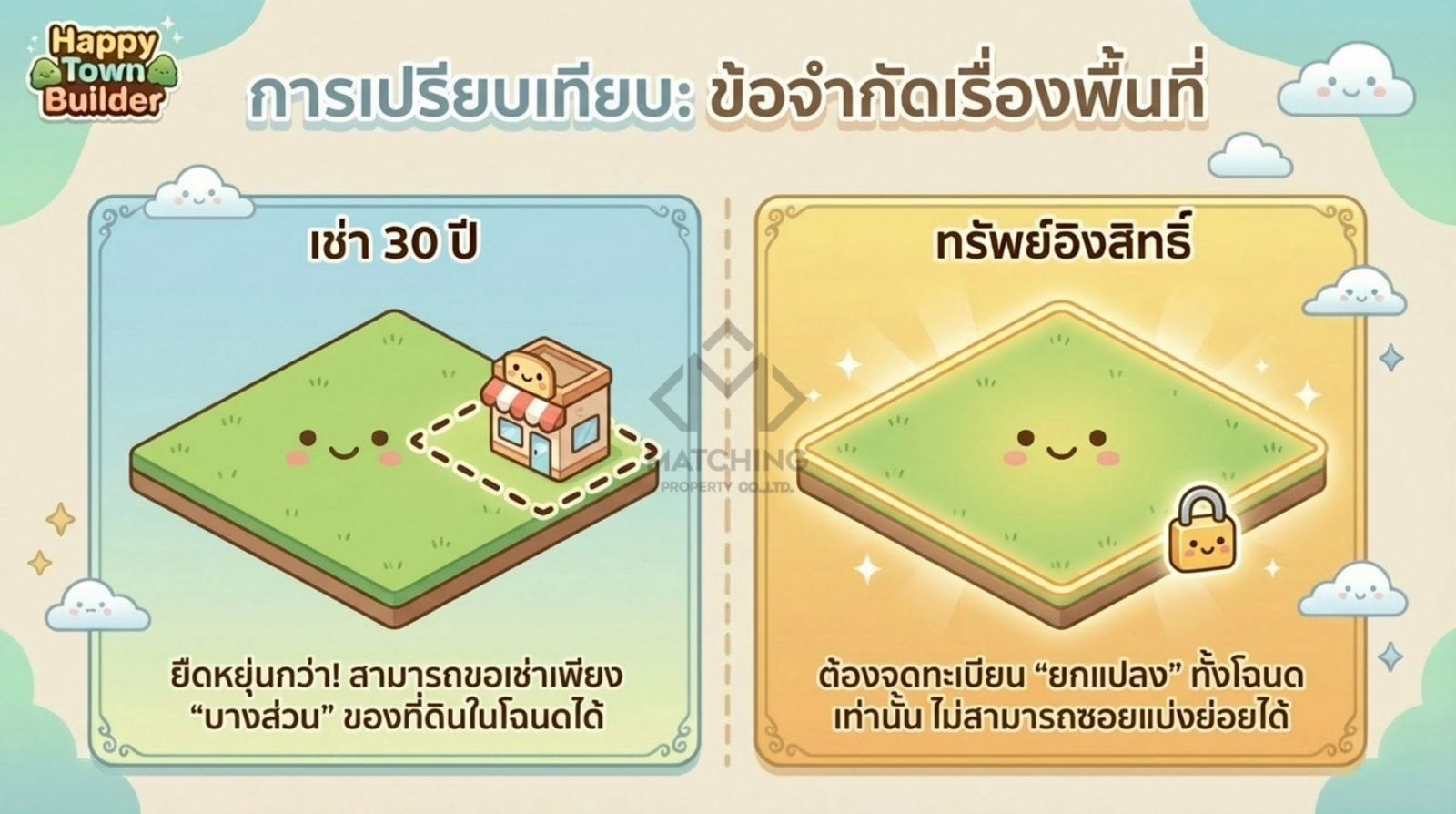
4. Limitation on dividing usable space
A 30-year lease:
it is possible to choose to lease only part of the land.
.
A rights-linked property right:
the right must be established over the full area of the entire plot.
It cannot be divided into smaller parts,
and the law allows it only on land with a title deed
or a condominium unit ownership certificate.
.
.
.
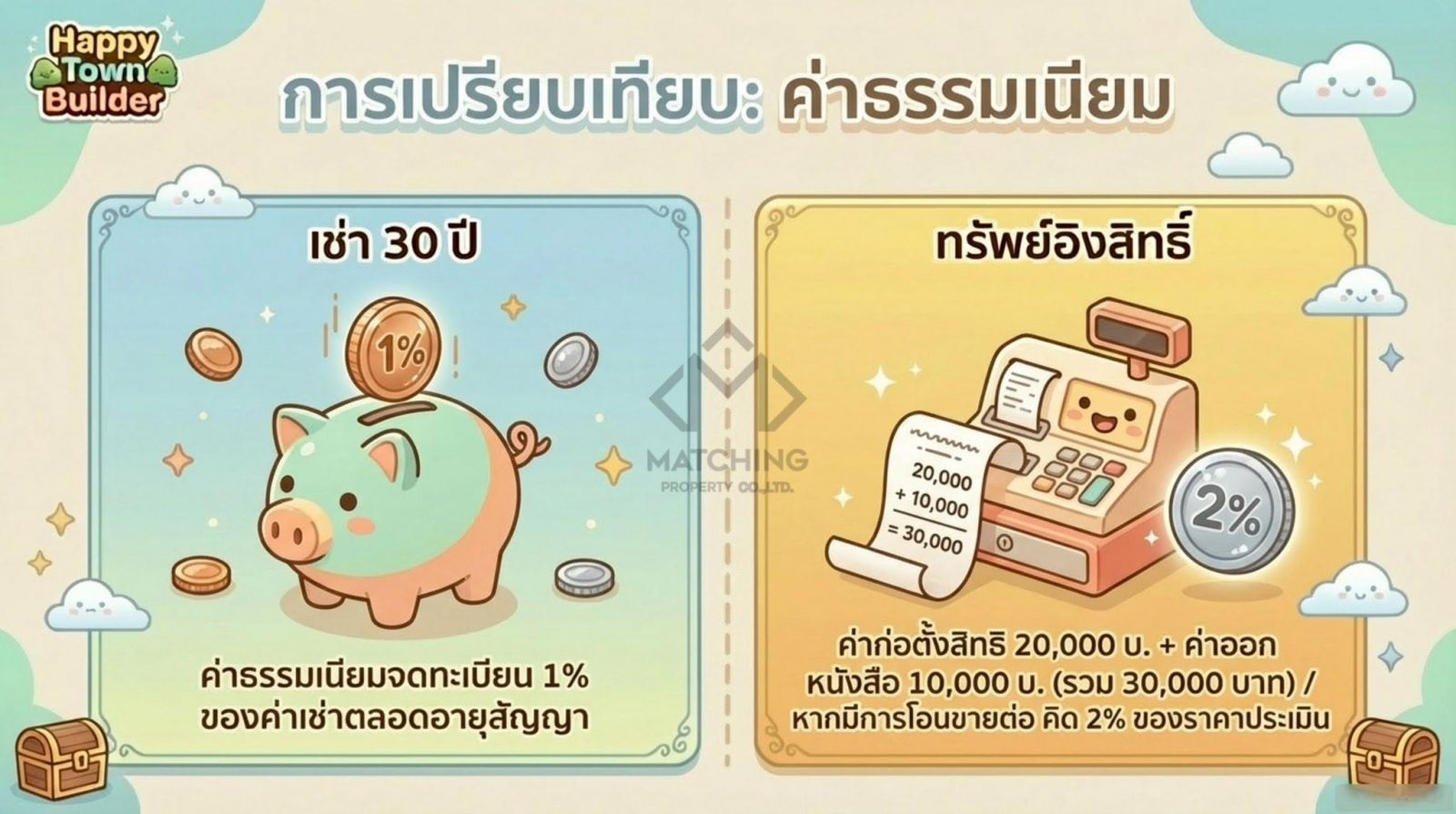
5. Fees and returns received
A 30-year lease:
the registration fee for a lease longer than 3 years
is 1% of the income over the life of the lease
(stamp duty is another 0.1, making 1.1 in total).
.
A rights-linked property right:
the initial registration fee is relatively high.
There is a 20,000-baht fee to establish the right
and a 10,000-baht fee to issue the certificate,
for a total of approximately 30,000 baht.
.
When this right is transferred and sold to a buyer,
there is a 2% fee
of the appraised value.
However,
the landowner can often
sell the rights-linked property right at a higher price
than an ordinary lease.
.
.
.
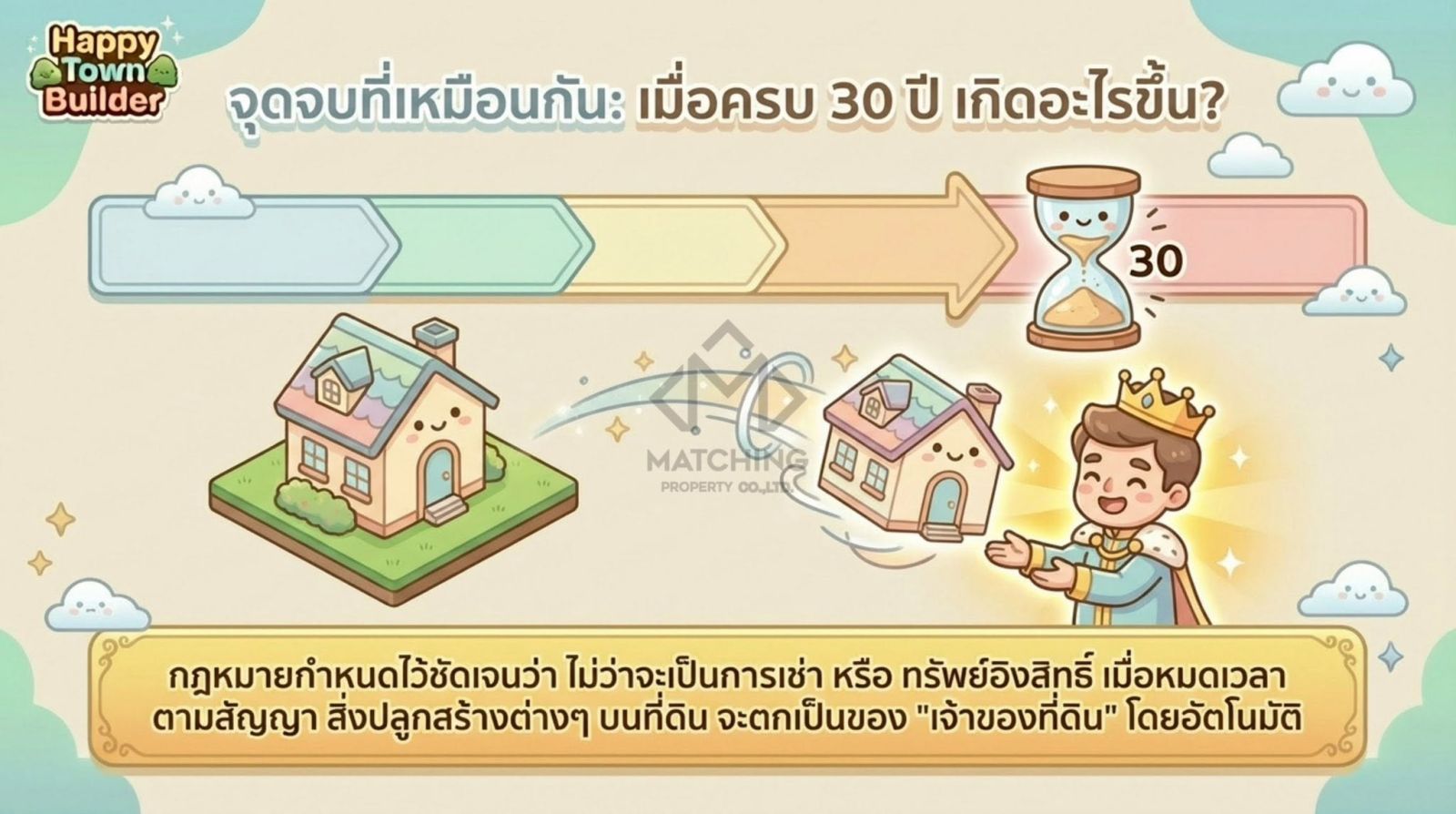
6. Benefit when the contract ends (up to 30 years)
A rights-linked property right:
the law clearly states that
when the right reaches the 30-year deadline,
all structures
that the rights holder built on the land
automatically become the property of the landowner.
.
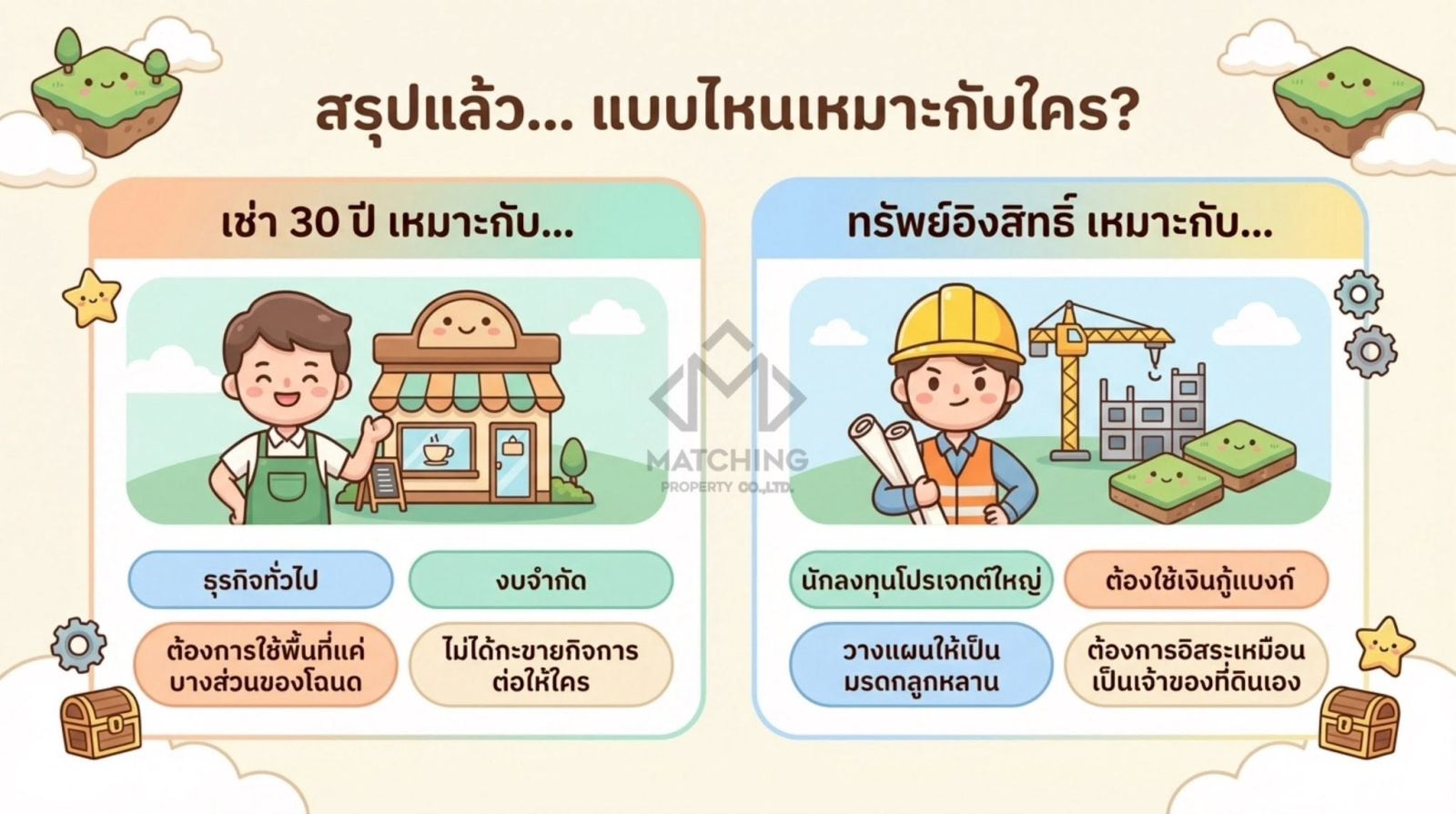
In summary, a lease
has limitations tied more closely
to the contract and the individual.
.
But a rights-linked property right
offers freedom similar to land ownership,
supports doing business,
can be used to borrow from a bank,
passed on to heirs
and sold or transferred more easily.
Join the conversation at
https://www.facebook.com/Ex.MatchingProperty/posts/pfbid0mU61trR3BTumu1uGkUV6ucdYs2LUEhxMpApe8z6rgqUaJrR2QXfqFYLKaAqAQ8LZl