






WeChat ID :


Login/Register

 Posted on 19 Nov 2025
 10534
10534


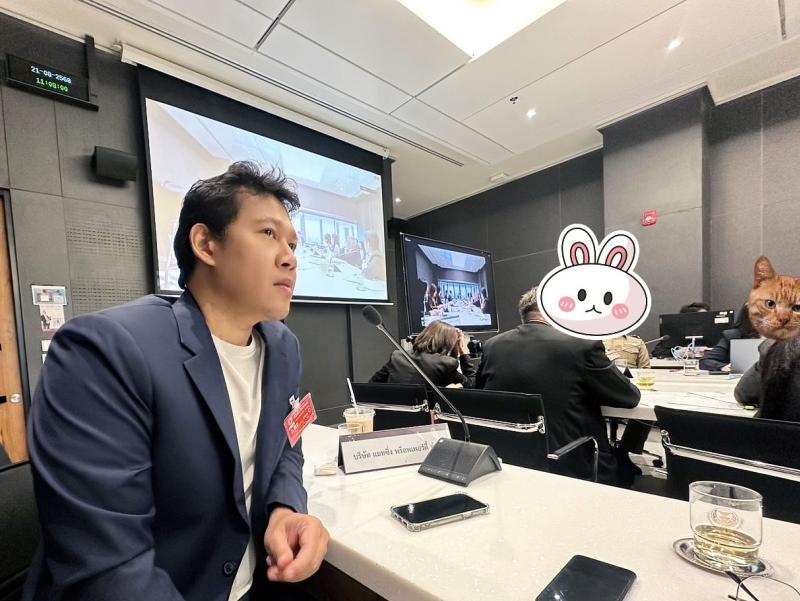
The other day
I and the condo‑fanatic Dad
gave information to the Economic Development Committee (EDC)
on the subject
“Consideration of Regulatory Guidelines for the Sale of Reservation Rights in Real Estate
to Protect Consumers and Maintain Business Stability”.
.
The issues reflected from real‑life cases
include projects announcing construction cessation,
EIA not approved or design extended,
even force majeure events causing a project to not complete.
.
A number of consumers stopped paying the down‑payment
because they were not confident whether the project would continue
which resulted in contract breach by implication.
.
Or some held on till the end
But when the project did not build
they were invited to “move to another project / wait for a new model”
And some who asked for refunds
did not get them easily.
.
Another major problem layer is
the ambiguity between
“reservation right” and “purchase reservation”.
Meanwhile
a correct condo sale should be based on full approvals/licenses,
primarily requiring 3 key documents
1. EIA
2. Construction permit from local authority
3. Condominium registration with the Land Department
.
But in practice
many developers must “open pre‑sales before having the EIA”
to prove demand
and to apply for bank loans for the project
which leads to downstream risk
when the project collapses.
.
Participants from governmental agencies
acknowledged the problems
and reported various data
to find methods to prevent and solve these issues decisively
with the host of this matter being none other than the Consumer Protection Board (CPB).
.
The CPB has issued the “Announcement on Control of Standard Contracts for Condominium Reservation 2024”
and standard contract templates
requiring businesses
to use fair wording and conditions
by setting a cancellation right when the project
“fails to obtain EIA approval / fails to fulfill construction permit conditions within deadline”.
.
And upon cancellation
developers must refund the reservation/contract‑like payment (not the full deposit)
to consumers within the timeframe in the contract
(currently communicated as 15 days).
.
Moreover CPB also has role to conduct lawsuits
on behalf of consumers in some cases
in order to achieve verdicts and actual compensation in more than 5,000 cases.
.
Local building control officers (under the Building Control Act)
have authority to issue construction/alteration/demolition permits
(file Form B1 with complete documents)
It is another “hard condition” before actual piling begins.
If there is no construction permit
Then collecting large sums from consumers
must fall under strict advance‑payment protection conditions.
.
The Land Department
Frankly, this matter is not really about the Land Department
They are simply responsible for
“registering the condominium building”
Issuing the unit ownership certificate
when the project completes
according to the approved plan and conditions.
Key documents submitted for registration
must reference the approved design from the local authority
and the private/common parts under the Condominium Act
Therefore if the “up‑stream” (EIA/construction) is unclear
the “down‑stream” like the Land Department still cannot register it anyway.
.
The Bank of Thailand
regulates financial institutions and project financing in general
Their macro‑policy framework
can “lock discipline” in the market heavily
for example requiring project‑loan practices
to be tied with regulatory milestones
EIA approved / construction permit issued / customer funds in Escrow genuine
before large disbursement
Not disbursing on assumptions.
.
And currently Escrow Agents actually exist
They are eight commercial banks that we know
and all eight have Escrow Accounts
which have agreements with the developer already
Only that drawing from the Escrow system
is still cumbersome and messy
because it implies
impact on the project’s credibility of the developer
which will get less and harder credit.
.
Currently the developer must show booking rate of 50%
before the bank will start to release the loan
Which the developer themselves
are in a bind
Must adhere to the rules of the Bank of Thailand too.
.
The Anti‑Money Laundering Office (AMLO)
When there are cases of fraud/cheating that meet base‑offence
AMLO has tools to seize/freeze assets and mechanisms
“to protect rights of victims”
to push assets back to the victims
after legal process
Must work with investigation agencies/prosecutors/execution.
Suitably used for foreign‑developer cases
who accept consumer money
then flee outside the country
in many cases.
.
Today the CPB’s standard contract
has partly expanded consumer rights already
But from what I hear
it seems like CPB is patching old wounds
with new rules that seem to open new wounds
Creating loopholes where issues happen
CPB must fix
its own standard contract
to tighten and protect consumer rights more
Because this is the important vacuum
that CPB must urgently handle.
.
Especially the right of cancellation when EIA fails
or construction permit does not come
And there must be an order to the developer
to refund all consumer money
Within the timeframe defined (15 days)
Without making consumers hire a lawyer and struggle.
.
In the overall structural system it is still “loose”
That deposits/contracts/down‑payment funds in many cases
are not under advance payment protection via Escrow
Leading to real‑life refund issues:
“Who holds the money – where is the money – how is it returned?”
This is the systemic gap that must be sealed completely.
.
After spending about three hours in the meeting
I saw systemic solutions
And the Chairman of the Committee seemed to understand this issue well.
.
No EIA, No Pre‑sale
Define clearly in subordinate law/policy
Prohibit opening bookings/accepting customer money
Until the EIA is passed officially.
.
Except in case of market research
Where accepting money is prohibited
And persuading communication is prohibited
All of this must align
with CPB’s standard contract
which allows cancellation if EIA doesn’t pass.
.
Mandatory Escrow for every customer’s money
Elevate the “Act on Protection of Contracting Party Interests (Escrow)”
From “optional” to “mandatory”
For all reservation/contract/down‑payment
Held with authorized escrow agent (bank/legal person)
Disbursed only per milestone: EIA passed → permit issued → major construction → then drawdown
To eliminate “missing money – unable to refund”.
.
Automatic 15‑Day Refund Rule
When cancellation conditions under standard contract are met
for example EIA fails / construction permit not issued on time / project halts
The Escrow system must refund automatically
within the timeframe specified
Without consumers having to hire a lawyer individually.
CPB acts as “standard setter” to the escrow agents.
.
Project‑Finance Guardrail by BOT
Issue practice guidelines for banks to tie the project‑loan contract
with “state‑approved evidence” (EIA/permit/Escrow)
and “customer refund requirement”.
If the project falters
Banks and Escrow jointly act as “refund channel”
Not pushing consumers to sue themselves.
.
Cross‑border Risk: Bond/Guarantee + AMLO Fast‑Track
Require developers that are foreign legal entities
Money flowing across borders must place “Performance Bond / Bank Guarantee”
with a domestic financial institution
And make MOU for fast‑track with AMLO + enforcement
For asset follow‑up / liquidation
To compensate victims
From years to months.
.
Central Disclosure Portal (EIA/Construction/Refund status)
Set up a central dashboard
allowing public to check in real‑time:
Has the EIA passed? What is the construction permit number?
How many % built? Which Escrow the customer money is in?
And if refund order issued
What is the transfer status?
Which can link API with ONEP/local authority/Escrow/CPB.
.
Therefore… from now on
Rules must be clear
Customer money must be safe
Data must be transparent
And refunds must be “actually doable”
Within a timeframe.
.
When the rules are locked
The market will regain discipline
Every party participates in responding to new policy/regulation
Consumers regain confidence
And transparent developers will stand sustainably.
.
Other agents may attend Agent Day events
But this agent here
Shows up at government agencies
Because he knows the boundaries of the state institutions
Politics / Law / Tax / Accounting — just a bit of everything.
.
Join the discussion at
https://www.facebook.com/Ex.MatchingProperty/posts/pfbid0NBxJUM71g8uhoivCEr4okVQe7rAmLycHG5Uppn2PCxxzij2YpGQnExpggiypeLwKl