






WeChat ID :


Login/Register

 Posted on 19 Nov 2025
 34738
34738


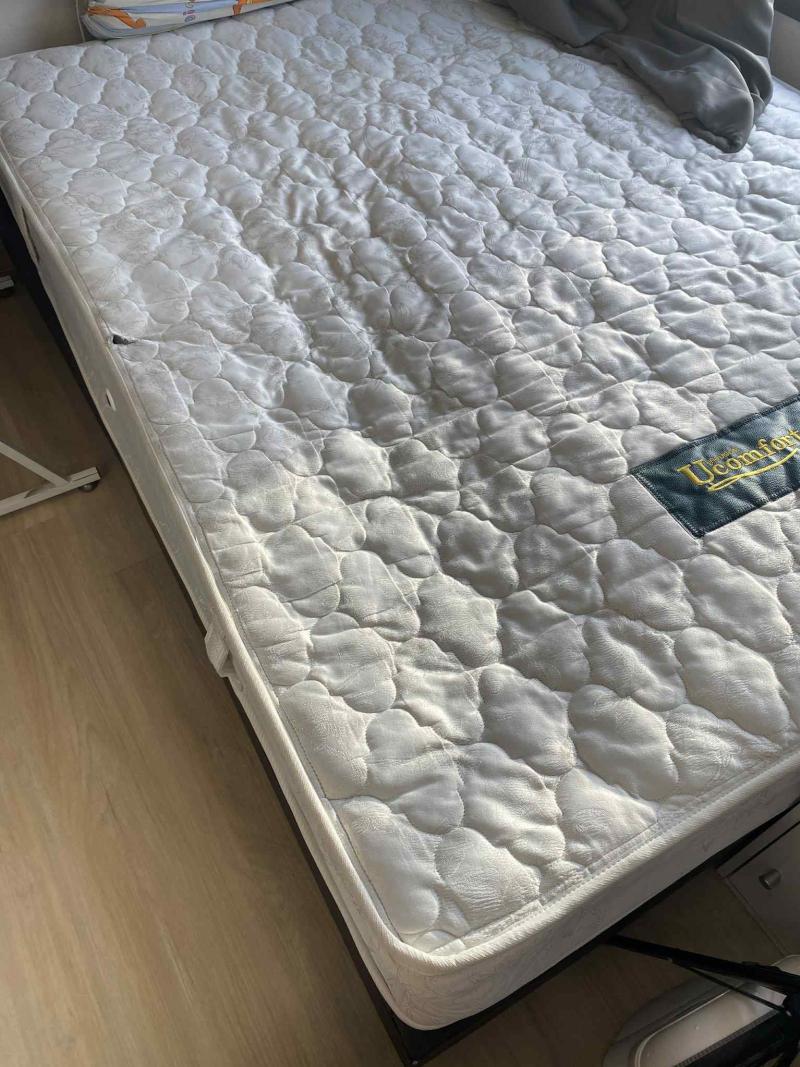
Q:
“P’ Ex, I have rented this condo for 3 years now.
If the mattress has sagged
until the steel springs show from sleeping like this,
will the owner make me buy it back?
My partner is quite heavy in weight.”
A:
This kind of case often has disputes,
because it lies right on the borderline between
“damage from normal use (wear & tear)”
and
“damage that arises from abnormal use.”
.
Under the tenancy law
and in the real‑estate industry practice,
this is a point of frequent argument and interpretation.
.
If the tenant has heavy weight
and causes the mattress to sag like this,
#the tenant will be held responsible.
.
.
According to the principles in the tenancy law
(Civil and Commercial Code Sections 544–552)
.
The lessor must deliver the property
that is in a usable condition according to purpose.
For example, the mattress must be in normal condition at the start of the contract.
.
The lessee must use the property carefully as a prudent person would
and must return the property
in a condition close to that at commencement
except for deterioration from normal use.
.
The issue is that you must prove
what the sagging of the mattress is caused by.
.
If it arises from the tenant’s weight
exceeding what the mattress standard supports,
this is usually interpreted as “abnormal use”
and the tenant must be responsible.
.
If it arises from poor mattress quality
or a long prior service life,
that is “normal wear & tear”
and the tenant is not responsible.
.
In most cases the lessor sees
furniture/furnishings as depreciation.
If the sag is slight
it is considered normal wear & tear
and no charge is made.
.
But if it is heavy sagging
to the point it cannot be used
the lessor will typically deduct from the deposit
because it is regarded as abnormal use by the tenant.
.
When I’m on‑site I use the following methods to check / prevent this problem:
.
At hand‑over of the unit
You should take photos of the mattress condition in the contract
or in the inspection checklist.
.
If the tenant has high body weight
They should inform the lessor in advance
so the mattress can be replaced with a special type
(e.g., Pocket Spring with high load capacity)
or the tenant supplies it themselves
This helps reduce disputes.
.
If the lessor did not inform of any mattress limitation
but the tenant uses it normally,
even with heavy weight,
they may argue that it is “wear & tear”.
.
#Short summary
If the mattress sags only slightly
That is wear & tear
The lessor must bear the cost.
.
If the mattress is seriously damaged such that it must be replaced
The lessor may deduct from the deposit
But should have clear proof that
The damage is beyond normal
Not just depreciation with age.
.
P.S.
Excess body‑weight criteria differ for each person
Therefore two measurable benchmarks are used:
.
BMI (Body Mass Index)
BMI = Weight (kg) ÷ [Height (m)]²
.
For example if height is 1.70 m
(so 1.70 × 1.70 = 2.89)
And weight is 70 kg
Then BMI = 70 ÷ 2.89 = 24.2
.
Waist circumference
If waist circumference is above the benchmark
Male > 90 cm, Female > 80 cm
That is considered above the general weight threshold.
.
Join the discussion at