






WeChat ID :


Login/Register

 Posted on 8 Jul 2025
 72428
72428


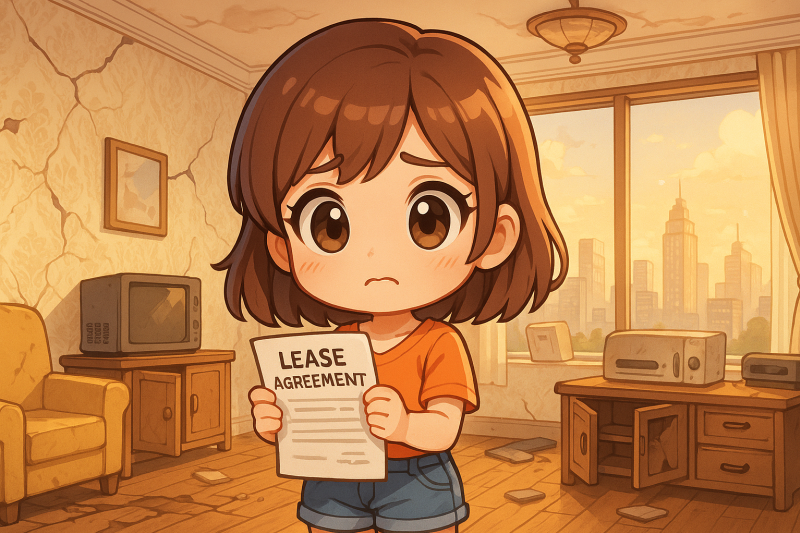
1 Common Question on the Owner Side
When the lease term expires,
the owner or the representative
must inspect the condition of the property.
.
But once the door opens, the air almost freezes.
The room’s belongings are damaged,
simply put — “a mess.”
.
The damages caused
are far beyond the two-month security deposit.
.
The owner might think
it’s hopeless to claim for damages
from the tenant.
.
Asking the agent to collect
seems useless,
reporting to the police goes nowhere,
so the proper way is to use the legal process.
.
This article will discuss the topic:
when you rent out your house and it gets damaged —
can you really claim for compensation from the tenant?
And how to do it legally.
.
For anyone who rents out a house
or a condominium —
whether a single house,
a townhouse, or a condo —
the question many people wonder (and worry about) is:
if the tenant moves out and leaves the house broken,
damages the wall, ruins the kitchen,
or breaks furniture,
and the deposit is not enough,
can we get our money back?
How to do it legally
and be sure to get the money?
.
Today we’ll go through it step by step,
easy to understand and practical,
because this is something
most homeowners don’t know,
and officials never tell us.
.
Before filing a lawsuit,
we should have the following evidence:
1.Lease agreement
It should clearly state
that the tenant must return the property in its original condition
(except for normal wear and tear).
.
2.Inventory or Checklists
Photos or videos from all angles,
before moving in
and after moving out
(floor, walls, furniture, appliances).
.
3.When the tenant moves out
Inspect within one or two days
to contact them immediately.
If damages are found,
make a “damage list”
and take photo evidence.
.
4.Estimate the repair cost by a technician or expert
Don’t guess the numbers yourself!
Let the technician estimate
or ask for an actual repair quotation,
so the tenant trusts that the numbers are fair
and it can be used as evidence in court if necessary.
.
5.Notify the tenant in writing
Send a written notice or email
to claim compensation,
clearly listing:
✅ items damaged
✅ repair costs
✅ deposit amount deducted
✅ remaining amount to be paid
Specify that the tenant must acknowledge
and give a reasonable payment period,
for example within 7 or 15 days.
.
If the tenant agrees to pay,
done — settled — no need to go to court.
.
If the tenant remains silent,
send a follow-up notice again,
clearly stating that
if no payment is made,
legal action will be taken.
.
If still ignored,
file a civil lawsuit
to claim for damages,
using the lease agreement,
damage evidence,
repair quotation or invoice,
and proof of notice.
.
The court will consider all evidence,
and if clear,
the tenant may have to pay all damages
plus interest (recommended to include interest in the notice),
otherwise, the court will set a standard interest rate of 5% per year.
.
#Cautions Often Overlooked by Landlords
✅ Do not deduct the deposit “randomly”
without evidence,
because if sued back,
you could lose the case.
.
✅ Even with relatives or close friends,
always make a written lease agreement,
and take photos + property inventory every time
to prevent disputes like “it was already damaged before move-in.”
.
#Legal Reference
Civil and Commercial Code Sections 580–581
state that the tenant must return the property in its original condition,
except for normal wear and tear.
.
If not repaired,
it is considered a breach of contract,
and the owner has the right to claim actual damages.
.
Join the discussion at
https://www.facebook.com/Ex.MatchingProperty/posts/pfbid0LCmgynXyNDpb1NWL9Wbktw8uX5JugacmyYzWcEwPoJohFtdBbmcPApftHhmc2APtl